
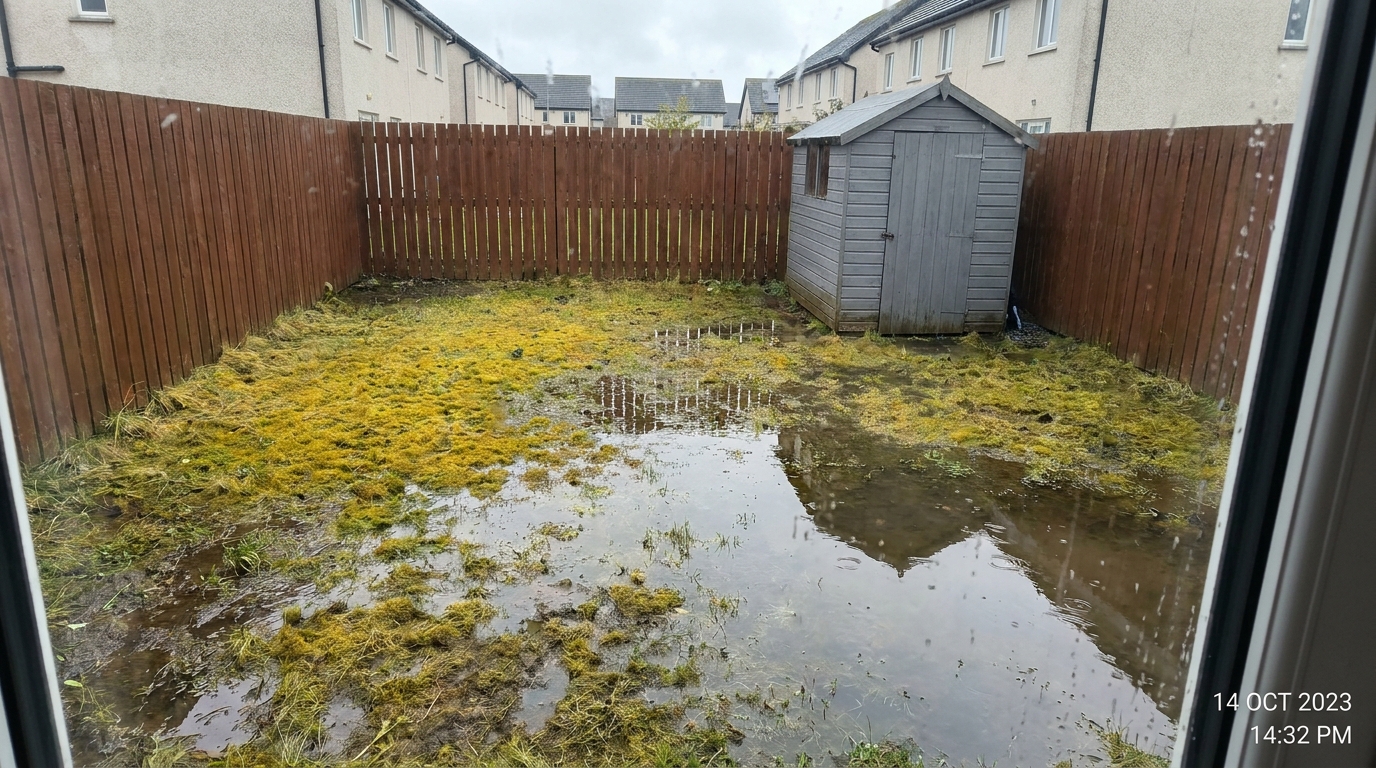
If you step out onto your lawn during winter and feel like you are walking across a sodden marsh, you are not alone. Dublin’s heavy rainfall, combined with the dense subsoil common across regions like Swords, Malahide, and Fingal, makes waterlogged gardens a massive headache for local homeowners. A wet garden isn't just frustrating for kids and pets; standing water can ruin grass turf, rot wooden fences, and even seep towards house foundations.
To fix a soggy lawn permanently, you need to understand why the water is pooling and choose a structured drainage solution that suits your site. Let's look at the science behind waterlogged Irish gardens, the best methods to drain clay soils, and the realistic costs you should expect for a professional installation.
Why is My Dublin Garden Waterlogged?
Waterlogging occurs when water enters your garden faster than it can drain away. In Dublin, there are two primary culprits for this issue:
1. The Heavy Clay Subsoil Problem
While sandy soils allow water to flow through them freely, clay soils behave like concrete. Clay consists of microscopic, flat mineral particles that pack together tightly with almost no air gaps. In North Dublin, this clay layer is often highly dense. When rain falls, these fine particles absorb water and swell, completely blocking any further drainage. The water has nowhere to go but to sit on top of the lawn, creating muddy puddles.
2. New-Build Estate Compaction
If you live in a recently constructed residential estate in Dublin, your drainage issues are likely caused by soil compaction. During construction, heavy diggers, dumpers, and machinery roll over the garden areas. This crushes the soil structure, squeezing out all air. Before handover, developers often spread a thin layer of topsoil and roll out turf directly over this compacted sub-base. The result is a shallow lawn sitting on top of an impenetrable layer of compacted clay—which water cannot penetrate.
Top 3 Garden Drainage Solutions
Depending on how severe your waterlogging is, here are the three most reliable landscaping methods we use to dry out Irish gardens:
1. French Drains (Land Drainage Lines)
A French drain is the standard workhorse for agricultural and residential land drainage. It is a gravel-filled trench that provides water with a path of least resistance, routing it away from wet lawn areas.
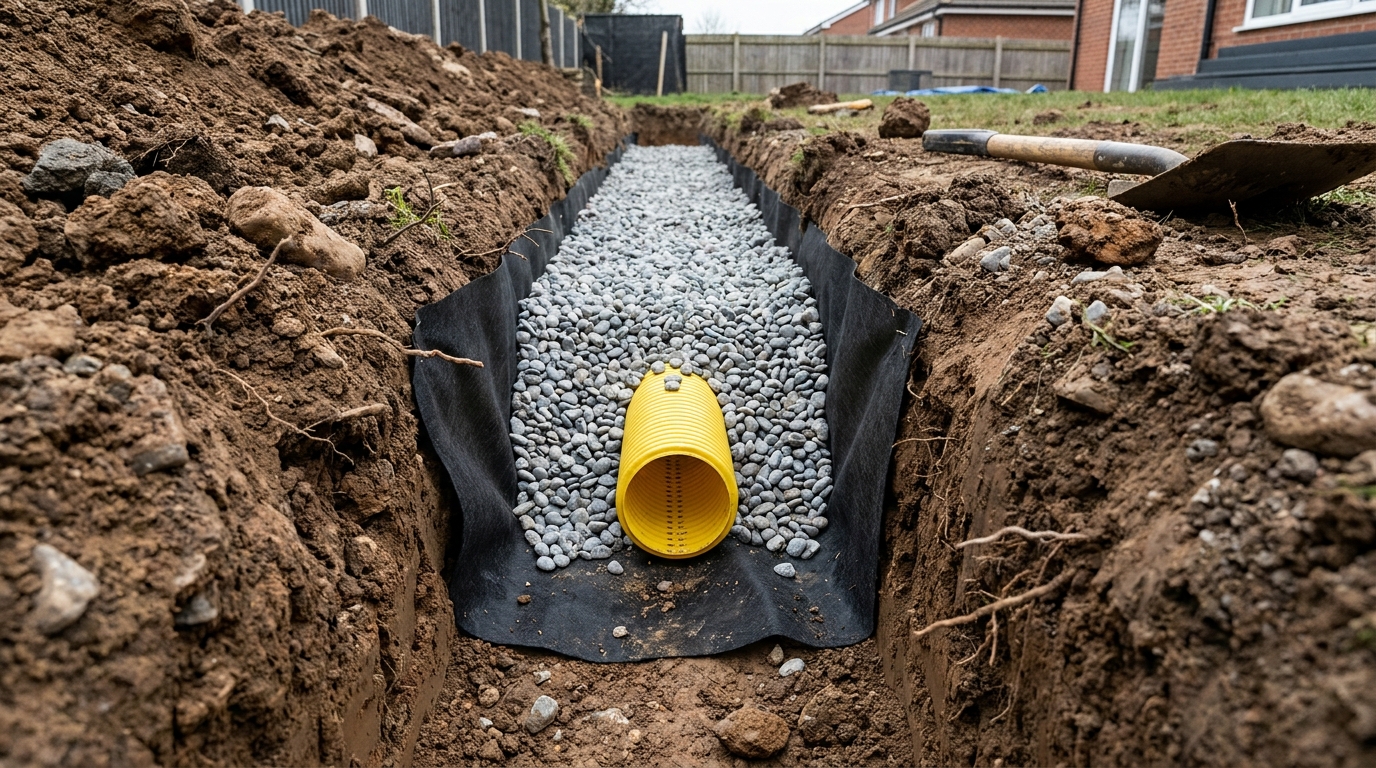
To build a French drain, we follow a strict multi-step process:
- Excavation: We dig a trench (typically 30cm wide and 60cm to 90cm deep) across the wet sections of the lawn, sloping gently downhill.
- Geotextile Liner: We line the entire trench with a non-woven geotextile membrane. This is critical; it allows water in but keeps silt and clay particles out, preventing the drain from clogging up over time.
- Perforated Pipe: We lay a perforated 100mm land drainage pipe along the bottom of the trench.
- Gravel Fill: We fill the trench to within 15cm of the surface with clean, coarse drainage gravel (10-20mm wash stone) before folding the fabric over and covering it with topsoil and turf.
2. On-Site Soakaway Pits
A French drain collects water, but it needs somewhere to go. Under Irish environmental laws, **you cannot legally discharge garden drainage water into public sewers or road gullies** without written council consent. The standard solution is an on-site soakaway.
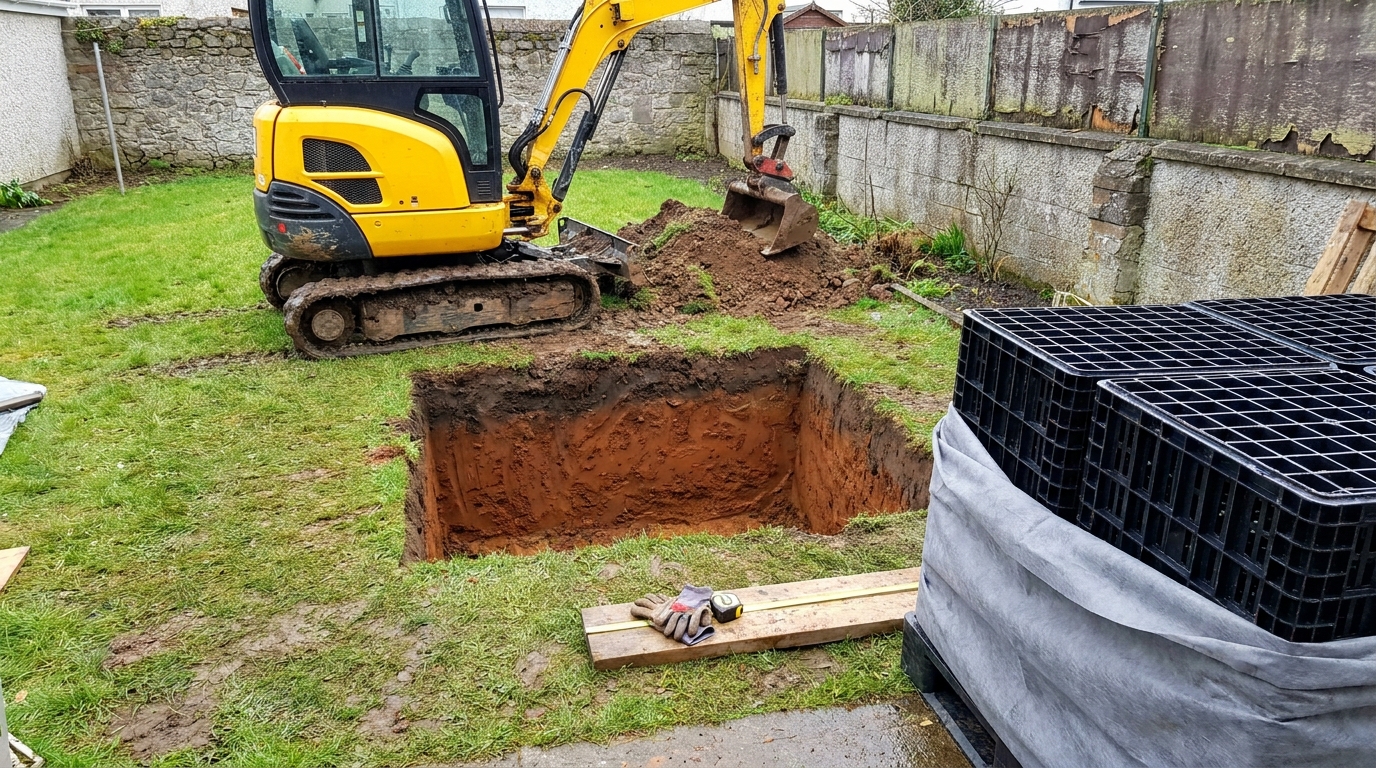
A soakaway is a large pit excavated in the garden (at least **5 metres away from house foundations** to prevent structural damage). The pit is filled with high-capacity plastic **soakaway crates** (attenuation crates) and wrapped in geotextile fabric. Water from the French drains enters the crates and slowly filters back down into the deep subsoil over 24-48 hours, preventing surface flooding.
3. Soil Amendment & Core Aeration
For gardens with mild waterlogging or surface dampness, installing pipes may not be necessary. Instead, we can improve the soil’s structure:
- Core Aeration: We use a machine to punch hollow plugs out of the lawn, creating thousands of vertical drainage holes that allow air and water to reach the roots.
- Grit and Sand Blending: We sweep horticultural sharp sand or grit into the aeration holes. Unlike fine sand, coarse grit keeps the clay structure open.
- Compost Top-Dressing: Adding organic compost introduces microorganisms that break up compacted clay, creating natural channels for water to drain.
How Much Does Garden Drainage Cost in Dublin? (2026 Prices)
The cost of resolving a wet garden depends on the size of your lawn, the depth of the clay, and whether diggers can access the area. Below are typical cost ranges in Dublin for 2026:
| Drainage Component | Average Cost (Dublin 2026) | Typical Requirements |
|---|---|---|
| French Drain (per linear metre) | €40 – €80 | Trench excavation, geotextile fabric, 100mm pipe, and drainage gravel. |
| Soakaway Pit Installation | €500 – €1,500 | Excavating 1m³ pit, modular crates, membrane wrapping, and backfill. |
| Soil Conditioning & Aeration | €250 – €600 | Core machine aeration, tilling sharp sand, compost top-dressing. |
| Average Backyard Drainage Job | €1,500 – €3,500 | Combination of 2-3 French drain lines running into a single modular soakaway. |
Summary of Garden Drainage Methods
Here is a quick checklist comparing your options:
- French Drains: Best for localized wet zones or pooling near fences. Highly reliable but requires a sloping garden or a deep soakaway.
- Soakaway Crates: Mandatory if you are installing land drains. Highly effective at handling heavy storm surges.
- Soil Aeration & Grit: Excellent for mild surface compaction, budget-friendly, but will not solve deep clay water tables.
People Also Ask (FAQ)
Is Your Dublin Garden a Muddy Mess?
Don't let a waterlogged lawn ruin your outdoor space. Our Dublin team can perform a professional site assessment, identify your clay compaction level, and design a French drain or soakaway system that works.
Get a Free Quote Form