
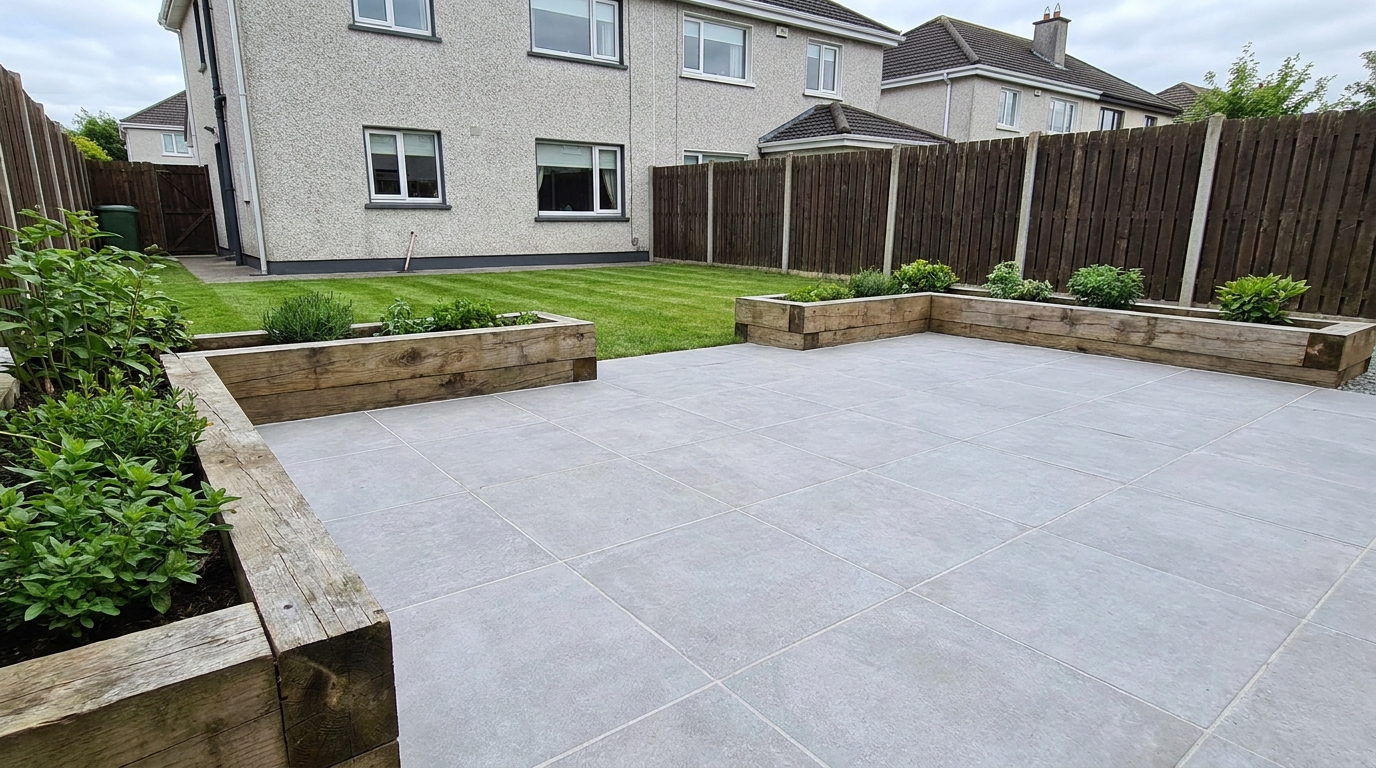
When you are planning a patio renovation in Dublin, choosing the right material is the biggest decision you will face. With Ireland's damp, unpredictable climate, you need a surface that doesn't just look beautiful on day one, but one that can survive wet winters without turning into a slippery green hazard. The two most popular choices in Irish backyards today are outdoor porcelain slabs and concrete paving slabs.
Both options have their place. Concrete has been the go-to standard for decades, and brands like Kilsaran and Tobermore offer great concrete choices. However, vitrified porcelain has quickly taken over the premium paving market. Let's take an honest look at how porcelain and concrete compare across pricing, durability, maintenance, and installation so you can make the right choice for your home.
1. What are Porcelain Paving Slabs?
Outdoor porcelain is not the same as the delicate tiles you use on kitchen walls. It is a highly specialized stone material made from refined clay baked at extreme temperatures (up to 1,200°C) under massive pressure. This process is called vitrification.
Vitrification melts the clay components into a glass-like structure, making the resulting slab incredibly dense and completely solid. For outdoor patios, we always use slabs that are 20mm thick. This density gives porcelain unique advantages: it has a water absorption rate of less than 0.05%, meaning moisture cannot penetrate the stone. This makes it naturally frost-resistant and highly durable.
2. What are Concrete Paving Slabs?
Concrete slabs, also known as concrete flags or paving flags, are made by mixing cement, aggregate stone, sand, and color pigments, and then pressing them into molds. Because they are cast, they can replicate a huge range of finishes—from smooth contemporary paths to textured traditional stones that look like natural slate or limestone.
In Ireland, manufacturers like **Kilsaran** (known for their Classic and Mellifont lines) and **Tobermore** (known for their Historic flags) produce excellent concrete flags. Concrete slabs are typically thicker than porcelain, ranging from **38mm to 50mm** for standard garden patios. Concrete is highly durable and structurally strong, but unlike porcelain, it is a porous material. It naturally absorbs water, which shapes how it behaves under the Irish rain.
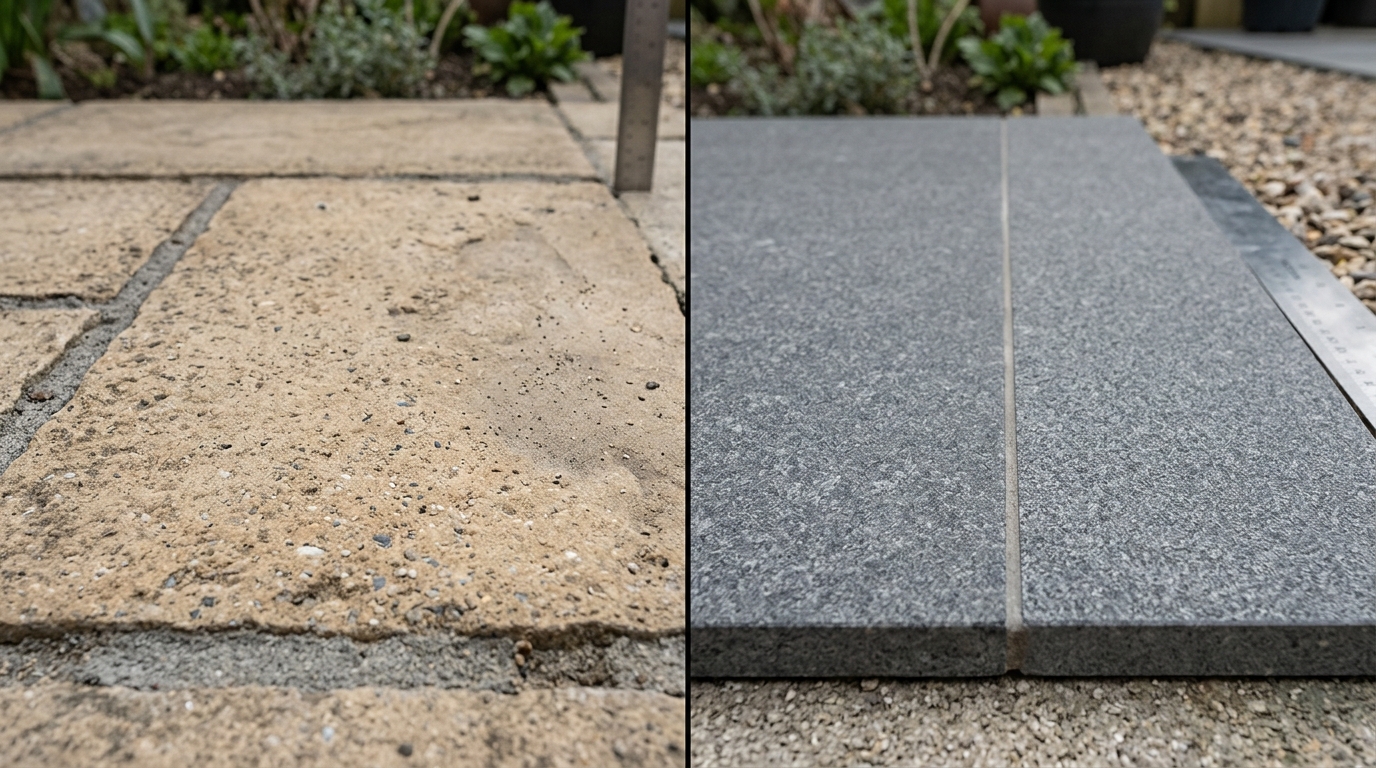
3. Porcelain vs. Concrete: Head-to-Head
Aesthetics & Design Options
If you want a sleek, ultra-modern look with clean lines, **porcelain** wins hands down. Slabs are manufactured with near-perfect dimensional accuracy, allowing for tight 3mm grout joints that make a small garden look twice as large. Porcelain can also replicate other materials with incredible detail, including wood planks, industrial concrete, or natural granite, without their associated maintenance issues.
**Concrete** is the better fit if your house has a traditional, rustic look. Its textured surfaces and tumbled borders match period homes and country gardens perfectly. Because concrete colors are mixed into the aggregate, they look highly organic, though they will fade slightly over years of UV exposure and weathering.
Algae, Moss, and Maintenance
This is where the difference between porous and non-porous materials becomes clear in Dublin gardens. Because concrete is porous, it holds moisture. In damp, shaded gardens, this moisture encourages the growth of algae, lichen, and moss—giving the stone the familiar "Dublin green patina" that makes patios very slippery when wet. To keep a concrete patio clean, you will need to pressure wash it at least once a year and apply a quality acrylic sealer every few years.
Porcelain’s non-porous vitrified surface means water simply cannot sit inside the slab. Algae and moss cannot take root. If dirt or autumn leaves build up, a quick sweep and a wash with soapy water are all it takes to restore the finish. Porcelain never needs to be sealed, and it will not stain from spilled red wine, grease from the BBQ, or grease marks from garden furniture.
Slip Resistance in Irish Weather
Many homeowners worry that porcelain's smooth surface will become a skating rink when it rains. This is a common myth. High-quality outdoor porcelain is manufactured with a textured glaze that provides excellent slip resistance. When buying porcelain, we always check that it has an **R11 anti-slip rating**. This rating is specifically certified for safe outdoor wet use. Concrete slabs are also naturally slip-resistant due to their coarse sand and stone textures, but if algae is allowed to grow on them, they can become extremely slick.
Installation Complexity (The Pruning Slurry Step)
This is the most critical technical difference. Laying concrete flags is straightforward: they are heavy, porous, and bond easily to a standard sand and cement mortar mix. They can even be laid on dry sand beds for utility paths.
Porcelain requires a highly skilled paving installer. Because porcelain is completely non-porous, **it cannot bond to a standard mortar bed on its own**. If you lay a porcelain tile directly onto mortar, it will pop loose within a few months as soon as the weather gets cold.
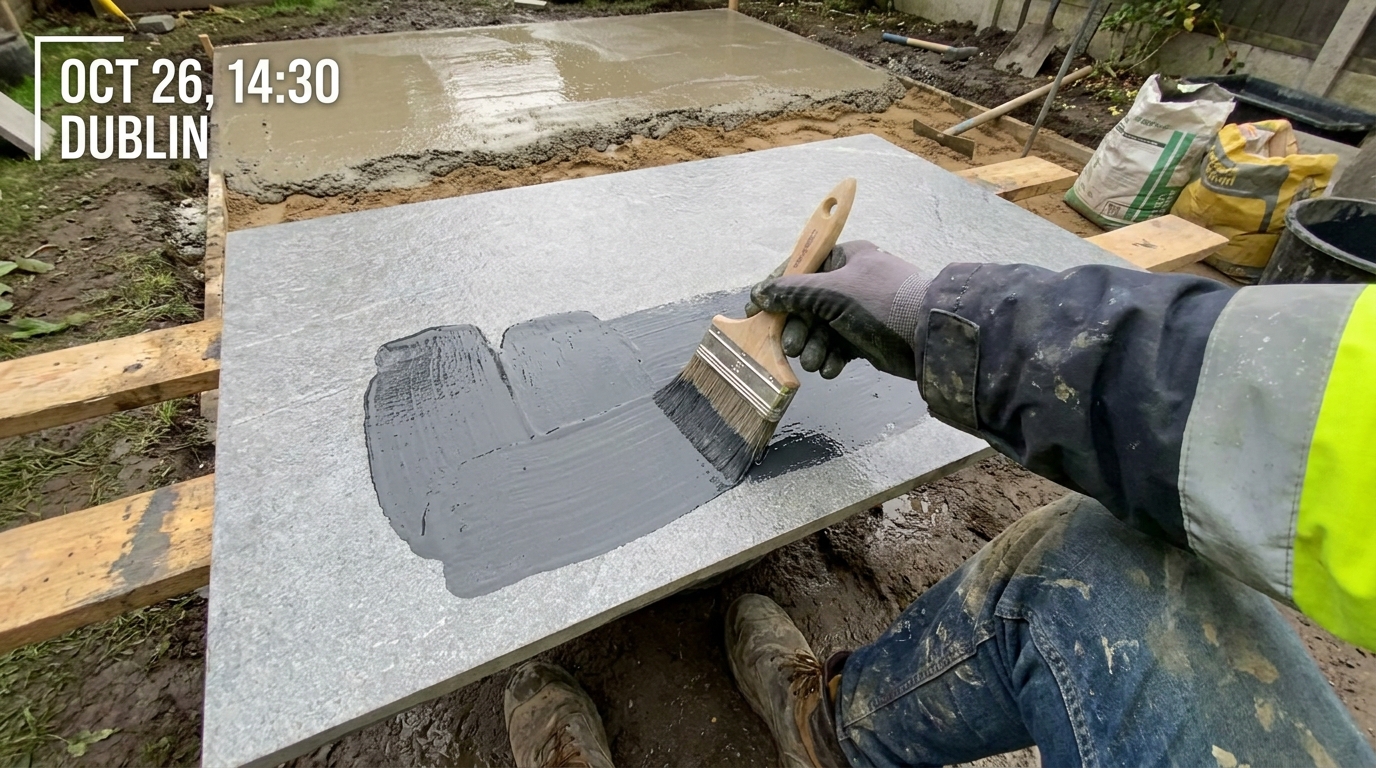
To prevent this, the installer must paint a specialized **SBR priming slurry** (slurry bond coat) onto the back of every single slab immediately before placing it onto the wet mortar bed. This chemical priming layer acts as the glue that permanently welds the non-porous porcelain to the concrete foundation. In addition, porcelain is incredibly hard; it cannot be cut with standard concrete chisels or cheap blades. It requires wet-saw cutters with diamond-tipped blades to ensure clean, chip-free edges.
4. Cost Comparison: 2026 Dublin Prices
While porcelain offers lower maintenance, it comes with a higher initial price tag. The table below breaks down the typical costs per square metre you should expect in the Dublin region in 2026:
| Cost Category | Concrete Paving Slabs | Outdoor Porcelain (20mm) |
|---|---|---|
| Material Cost (per m²) | €15 – €45 | €50 – €95+ |
| Installation Materials | Sand, Cement, Jointing sand | Mortar, SBR Priming Slurry, Porcelain Grout |
| Labor & Groundwork Complexity | Standard excavation & laying | Advanced prep, diamond cutting, slurry bonding |
| Total Installed Cost (per m²) | €70 – €100 | €110 – €160+ |
For a standard 30 square metre patio, a concrete slab layout will generally cost between **€2,100 and **€3,000** fully installed. A vitrified porcelain patio of the same size will range from **€3,300 to **€4,800+** depending on the specific tile choice and access challenges. While porcelain costs roughly 40% more upfront, you save on sealers, cleaning chemicals, and maintenance labor over time.
5. Summary: Which Should You Choose?
To summarize, the best choice depends on your budget, property style, and maintenance preferences:
- Choose Porcelain If: You want a modern design, hate pressure washing, want a slab that never stains or fades, and have the budget for a premium, long-lasting installation.
- Choose Concrete If: You prefer a traditional, rustic look, are working with a tighter budget, or are paving a utility area where algae growth isn't a concern.
People Also Ask (FAQ)
Ready to Build Your Dream Patio in Dublin?
Whether you want a sleek, modern porcelain design or a classic, hard-wearing Kilsaran concrete layout, we can help. Our team provides professional installation with a full groundwork guarantee.
Get a Free Quote Form